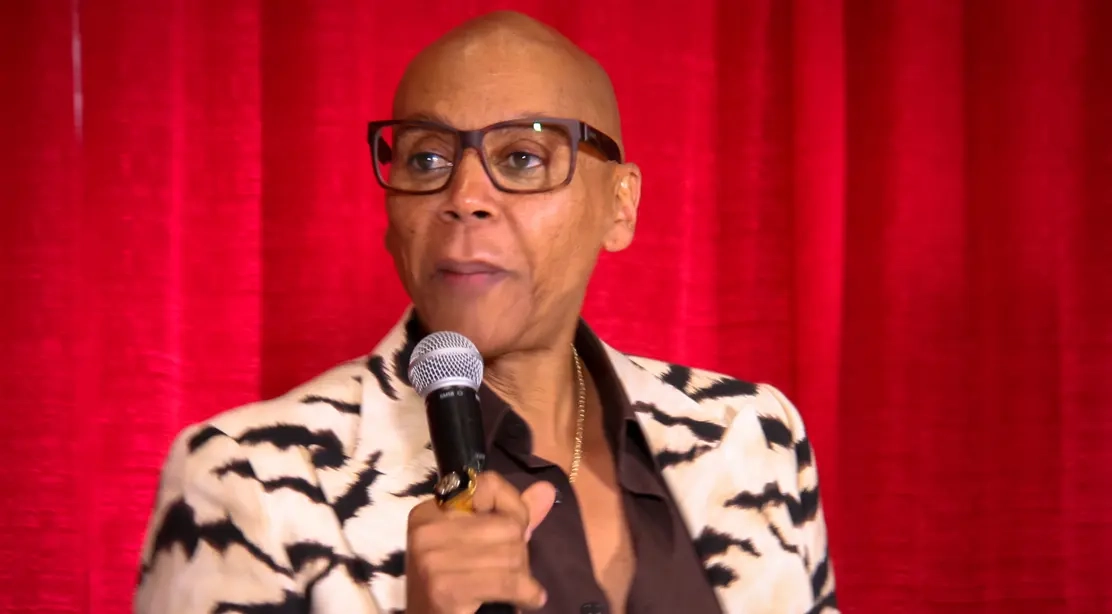
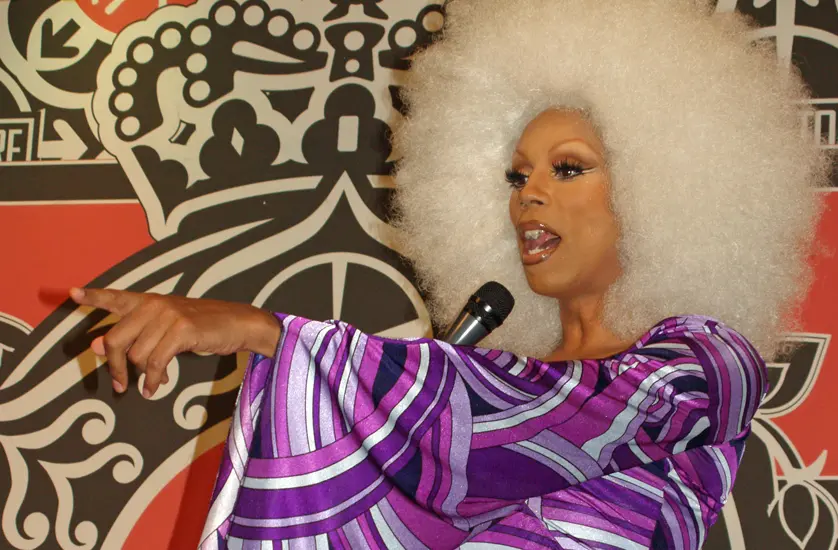
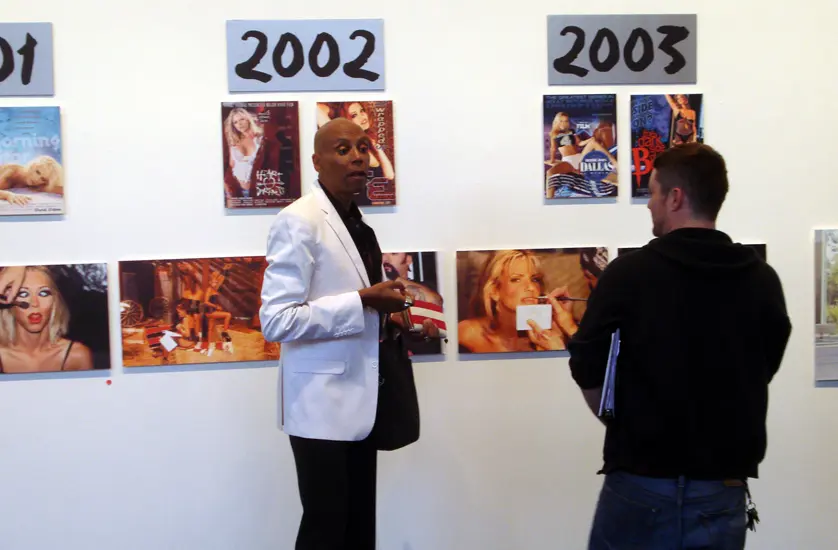
RuPaul at RuPaul’s DragCon, 2019. Photograph by DVSROSS, via Wikimedia Commons. Licensed under CC BY 2.0. Cropped by Unbroken Pride.
Visibility, self-regard and the refusal to shrink.
RuPaul Charles is one of the clearest living examples of what becomes possible when a queer person refuses to make themselves smaller.
For many LGBTQIA+ survivors of family rejection, identity-based harm and minority stress, the messages received early in life were variations of the same theme: be less visible, be less yourself, be less.
RuPaul’s public life has consistently offered a counter-message.
Visibility, personality, humour and unapologetic presence are not liabilities. They can be the very materials from which a life of impact is built.
Refusing to shrink
Born in San Diego in 1960, RuPaul moved to Atlanta as a teenager and began developing as a performer in the city’s punk, performance and public-access television scenes. New York followed, along with its club culture, before the international success of “Supermodel (You Better Work)” brought RuPaul to a much wider audience.
What followed was not simply entertainment success. It was the construction of a platform that made space for queer performance, language and community within mainstream popular culture.
Since its debut in 2009, RuPaul’s Drag Race has become the centre of an international television franchise. Its success has also helped move drag from comparatively marginal cultural spaces into the mainstream, bringing forms of queer creativity and performance to audiences on an unprecedented scale.
Drag Race did more than create stars. It demonstrated that qualities queer people have often been pressured to suppress — theatricality, wit, flamboyance, difference and self-invention — could instead be treated as valuable.
Self-love as foundation
One of the lines most strongly associated with RuPaul and Drag Race remains one of the most useful:
“If you can’t love yourself, how in the hell you going to love somebody else?”
This is not a soft affirmation.
It is a practical and demanding statement. It places self-regard as a prerequisite rather than a reward.
For survivors whose early environments taught them that their identity made them difficult to love, the sentence can land with particular force. It does not require anyone to perform confidence they do not yet feel. It simply names the internal work as necessary and legitimate.
Self-love after harm is not always instinctive. For some people it has to be relearned deliberately: by recognising inherited shame, questioning the messages attached to identity and gradually replacing those messages with something more accurate.
Being LGBTQIA+ was never the defect.
Excellence without perfection
Within Unbroken Pride, RuPaul holds a prominent place among the Queer Excellence Notes precisely because of this combination: the refusal to shrink, the sustained creation of cultural space and the consistent return to self-love as foundation rather than afterthought.
The notes exist as deliberate counterweights to shame.
They remind readers that LGBTQIA+ people have always contributed, organised, created and shaped culture, often under conditions of hostility or erasure. RuPaul’s career is a contemporary illustration of that longer pattern.
Importantly, excellence here does not mean perfection, agreement with every decision a person has made, or the absence of struggle.
It means contribution under pressure.
It means recognising what somebody’s life or work demonstrates about the possibilities available to queer people.
In RuPaul’s case, that includes using the full range of personality: charm, sharpness, humour, theatricality and presence, rather than sanding those qualities down in the hope of becoming more acceptable.
The public example is powerful precisely because the alternative is visible: a life built not by disappearing, but by becoming more distinct.
Lineage and permission
For readers of Unbroken Pride, the value is not celebrity.
It is lineage and permission.
You come from people who made things, said things, organised communities, created culture and stayed visible when it would have been safer to disappear.
RuPaul is one of the most recognisable contemporary faces within that much larger lineage.
You do not need to become a public figure.
You do not need to be extraordinary in order to deserve dignity.
Ordinary queer life is already enough.
Encountering figures like RuPaul simply restores accurate context: queer people have always been here, creating and taking up space. That knowledge can become one more tool for reclaiming safety, self-acceptance and pride after harm.
Take what serves. Leave the rest.
About Queer Excellence Notes
Queer Excellence Notes are short reflections on LGBTQIA+ people whose lives, work or public contributions offer counterpoints to shame, erasure and the idea that queer people should make themselves smaller.
Excellence does not mean perfection, nor does inclusion represent endorsement of every aspect of a person’s life, opinions or work. The notes consider what can be learned from particular contributions, acts of courage, creativity, visibility or cultural change.
Sources & further reading
The Interviews: RuPaul Charles — Television Academy, 2019
A first-person oral history covering RuPaul’s early life, Atlanta and New York years, career development, television work and reflections on self-determination.
RuPaul Andre Charles — California Museum
Biographical overview covering RuPaul’s San Diego origins, move to Atlanta, New York nightclub career and mainstream breakthrough.
RuPaul Charles — Television Academy
Professional biography and awards record, including RuPaul’s role as host and producer of RuPaul’s Drag Race since 2009.
Feldman, Zeena & Jamie Hakim — “From Paris is Burning to #dragrace: social media and the celebrification of drag culture,” Celebrity Studies, 2020
Academic analysis of RuPaul’s Drag Race, mainstream visibility, celebrity culture and drag’s movement from cultural margins toward the mainstream.
Outstanding Reality Competition Program — Television Academy, 2018
Transcript of RuPaul’s Emmy acceptance remarks, including the self-love quotation referenced above.